





What You Need to Know Before In/Deflating Your Air Mattress?
Before diving into the actual inflation process, there are a few key things you need to consider to make sure the job is done efficiently and safely. Here’s what you need to know:
1. Know Your Air Mattress Type
Before inflating or deflating, identify what kind of air mattress you have:
● Built-in electric pump air mattress
● Manual pump / external pump
● Self-inflating camping mattress
Each type has different inflation speeds, pressure limits, and care needs. It is crucial to identify your specific model first.
2. Use the Correct Valve
Improper valve handling is a major cause of slow leaks, ensuring the nozzle fits snugly to get the best results without straining the motor.
●Make sure the valve is fully open when inflating
●Ensure it’s tightly sealed after inflation
●For deflation, open all air release points for faster airflow
3. Don't Over-Inflate
When inflating an air mattress, it's important not to over-inflate, as this is one of the most common mistakes. According to independent product testing organizations such as Consumer Reports, over-inflation is one of the most common causes of seam failure in inflatable beds. Excess internal pressure increases material stress, especially under fluctuating temperatures.
A properly inflated mattress should feel firm yet slightly flexible rather than rock-hard. A good rule of thumb is to inflate it to about 90 percent, then lie on it and make small adjustments to achieve the right level of comfort and support. To make this process easier and avoid over-inflation, you can also choose an air mattress with an automatic inflation and auto-stop feature, which fills the mattress to an optimal level and stops on its own.
4. Temperature Matters
Air mattresses follow basic gas laws — when the temperature rises, internal air pressure increases due to thermal expansion. Even a 10–15°F increase can significantly raise internal PSI, placing stress on seams and weld points, so it's best to inflate it in room-temperature conditions and avoid direct sunlight, which can cause the air inside to expand. In colder environments, the mattress may feel softer as the air contracts, making it important to re-check firmness before sleeping, especially when camping or traveling in an RV.
For colder conditions, choosing a sleeping pad with a high R-value can also make a noticeable difference, as it provides better insulation from cold ground or RV floors and helps maintain overall comfort even when temperatures drop.
5. Deflate Completely Before Storage
Before storing an air mattress, it's essential to deflate it completely and never fold or store it while air is still inside. Fully opening the valve and gently pressing or rolling the mattress from the opposite end helps all the air escape evenly. Proper deflation before folding reduces internal stress on the material and prevents unwanted creases, which can extend the mattress’s lifespan and keep it in good condition for future use.
6. Avoid Sitting on the Edge
When inflating or deflating an air mattress, concentrated edge loading increases localized tensile stress along seam welds. Repeated compression in these areas can accelerate material fatigue and reduce product lifespan. Allow the mattress to inflate and deflate evenly without added weight to help maintain its structural integrity and extend its lifespan.
How to inflate an Air Mattress
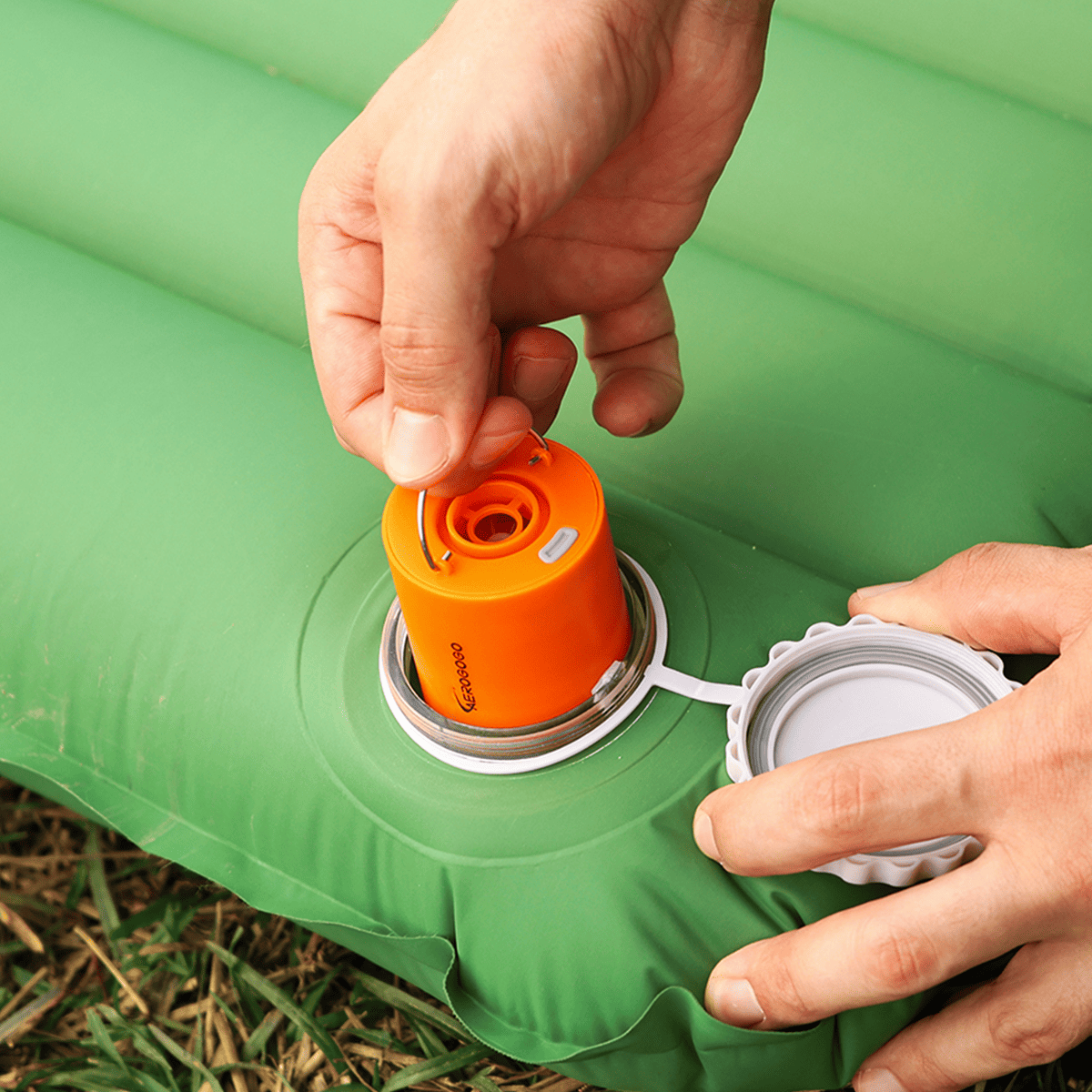
Inflating your air mattress is a simple process, but using the right air pump can make it faster and more efficient. The key difference lies in choosing the right air mattress pump for your specific environment—home, RV, or outdoor camping.
Universal Steps to Inflate an Air Mattress
No matter which pump you use, follow these general steps for safe and efficient inflation:
1. Choose a Safe, Flat Surface
Place the air mattress on a flat, clean surface away from sharp objects.
2. Connect the Power
Plug in your electric, battery-powered, or rechargeable mini pump. Make sure the power source is stable and sufficient for the pump type.
3. Attach the Nozzle
Securely connect the pump nozzle to the mattress valve, ensuring a tight seal to prevent air leakage.
4. Turn on the Pump
Power on the pump and begin inflating the mattress.
5. Check the Firmness
Periodically check the mattress firmness during inflation to ensure it's not overinflated. Stop inflation at around 90% fullness, then lie on the mattress and make small adjustments if needed.
6. Turn off the Pump
Once inflated, turn off the pump and disconnect it.
7. Close the Valve
Ensure the mattress valve is tightly closed to prevent any air from escaping.
These steps apply to AC electric pumps, battery-powered pumps, and rechargeable mini air pumps.
How to Choose the Right Air Pump for Air Mattresses?
After learning the proper steps to inflate your air mattress, the next important consideration is choosing the right air pump. The type of pump you select can make the inflation process faster, easier, and more efficient, depending on where and how you plan to use your mattress.
Different Types of Air Mattress Pumps
While the inflation process is universal, selecting the right pump can greatly improve convenience, efficiency, and portability, depending on where and how you use your air mattress.
AC Electric Air Pump for Home Use
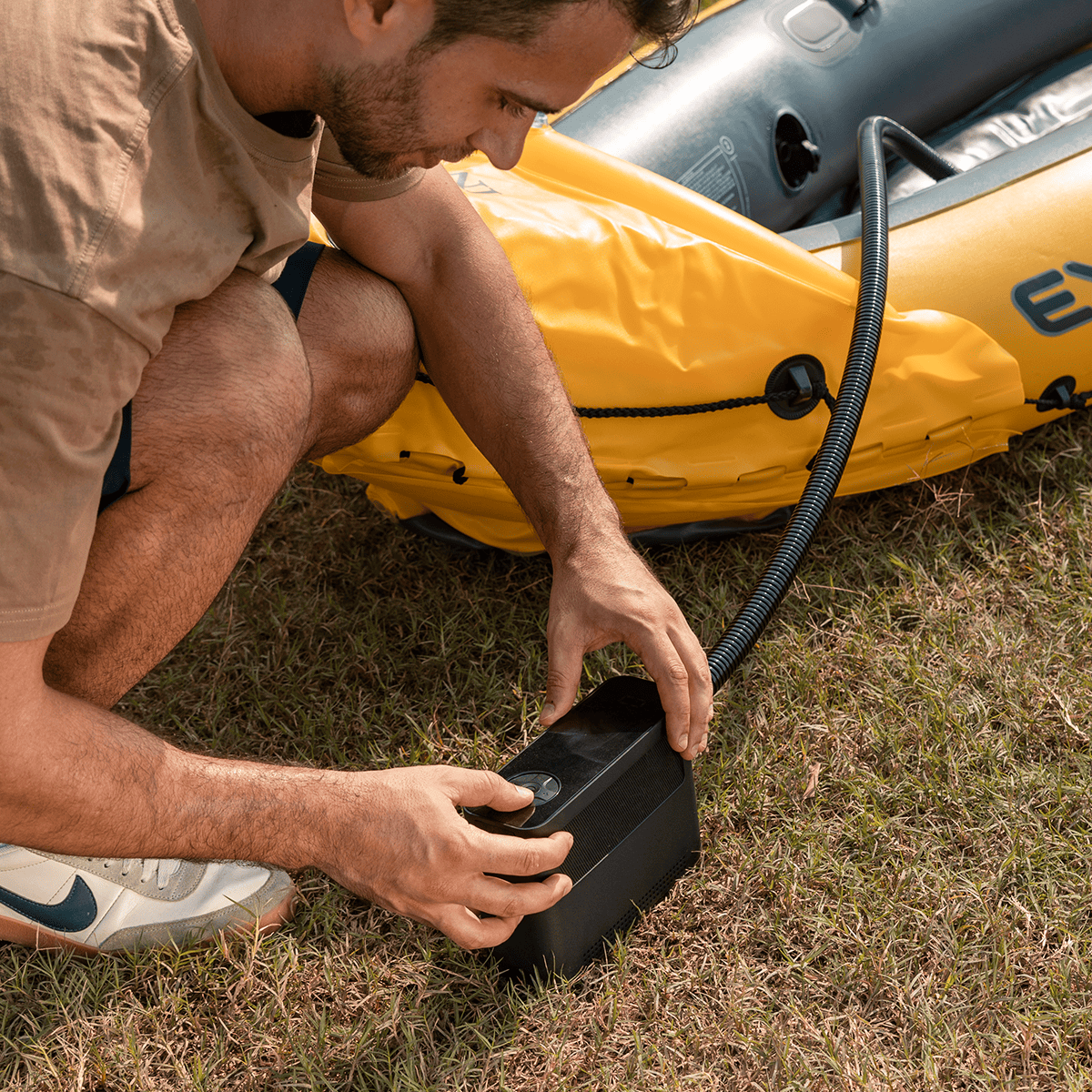
Powered by a standard wall outlet, these are the traditional electric air mattress pump models. They typically house larger motors that can handle continuous operation without overheating.
Pros: Their primary advantage is affordability and unlimited runtime. Because they draw power directly from the grid, they are the most efficient air pump for inflatables with massive volumes, such as large family swimming pools, luxury Queen-size air beds, or giant inflatable islands.
Cons: Extremely limited by the length of the power cord. They are bulky and inpractical for outdoor camping or travel where a wall outlet isn't accessible.
Battery Powered Air Mattress Pump for Camping RV
Unlike traditional bulky pumps, these devices utilize high-density lithium-ion batteries and ultra-efficient high-speed brushless motors capable of reaching up to 30,000 to 50,000 RPM. This allows them to compress massive air volume into a tiny form factor.
Pros: They function as a 3-in-1 multifunctional system that integrates high-pressure inflation, powerful vacuum deflation, and adjustable camping illumination. This makes them indispensable in the deep wilderness where power outlets are nonexistent. Beyond setting up your air bed and electric pump in minutes, their concentrated airflow serves as an efficient fire-starter to boost campfires.
Cons: The main disadvantage is that they are entirely battery-dependent. Once the power runs out, you are left without a pump until you find a charging source—a major inconvenience for those spending several nights in the wilderness.
What is the Best Air Mattress Pump?
When looking for the best air pump for an air mattress, real-world performance matters more than just brand reputation. Based on manufacturer specifications and independent reviewer benchmarks, inflation times for queen-size mattresses typically range between 4–9 minutes depending on motor output and airflow design. High-performance pumps typically operate between 15–25 CFM airflow rate.
Aerogogo vs Intex vs Flextail vs Coleman vs Sea to Summit
|
Pump Model |
Approx. Price |
Power Source |
Weight |
Size |
Inflation Time (Queen Mattress) |
Notes |
|
Aerogogo GIGA PUMP Air |
$39–49 |
USB / Power Bank |
1 oz |
3.5 × 1.5 × 1 in |
5–7 min |
Ultra-light, portable, automatic stop |
|
Intex Quick-Fill Mini Pump |
$20–25 |
AC / DC |
1.5 lb |
6 × 4 × 3 in |
5–8 min |
Affordable, slightly bulkier, AC power preferred |
|
Flextail Portable Pump |
$45–55 |
Battery-powered (Rechargeable) |
5 oz |
4 × 2 × 2 in |
6–9 min |
Lightweight, good for camping, battery required |
|
Coleman QuickPump |
$30–40 |
Battery / AC |
2.2 lb |
7 × 4 × 4 in |
4–6 min |
Faster for medium to large mattresses, heavier |
|
Sea to Summit Ultralight Pump |
$50–60 |
USB / Power Bank |
2.4 oz |
3.5 × 1.5 × 1 in |
5–8 min |
Backpacking focused, very compact |
For ultralight travel and maximum portability: The Aerogogo GIGA PUMP Air and Sea to Summit Ultralight Pump are top choices. Their compact size, featherlight weight, and USB/Power Bank compatibility make them ideal for backpacking, camping, and RV trips.
[[giga-pump-air]]
For fast inflation of large mattresses or home use: Pumps like the Coleman QuickPump or Intex Quick-Fill Mini Pump can inflate queen-size beds faster, but they are heavier and less convenient for travel.
Power source determines the best use case: USB or Power Bank-powered pumps are perfect for outdoor adventures, RVs, or camping, while AC-powered pumps are better suited for home use.
Consider value for money: Lightweight travel pumps may cost more per ounce of performance but provide unmatched convenience for portable use. For home or occasional use, AC pumps offer strong performance at a lower cost.
How to Deflate an Air Mattress?
Deflating your air mattress is just as simple as inflating it. The process is essentially the reverse of inflation. Doing it the right way ensures your mattress stays in good condition, prevents damage to the seams, and makes storage much easier. Follow these simple steps to deflate your air mattress efficiently.
1. Open the Valve Fully
Locate the mattress valve and open it completely. This allows air to escape quickly and evenly. If your mattress has multiple valves, open all of them.
2. Gently Press or Roll the Mattress
Start from the opposite end of the valve and gently press or roll the mattress to push the air out. Move slowly to avoid stressing seams or creating creases that could weaken the material.
3. Fold Carefully
Once most of the air is out, fold the mattress along its natural seams. Avoid sharp bends or forcing the mattress into a small bag, as this can damage the internal chambers.
4. Store in a Dry, Cool Place
After deflating and folding, store your mattress in a clean, dry, and cool area. Avoid damp locations that can cause mold or mildew, and keep it away from direct sunlight to prevent material degradation.
5. Use a Pump for Faster Deflation
Some air mattresses and pumps allow reverse operation for rapid deflation. If available, use your air pump’s deflate function to remove air faster and more evenly.
Final Thoughts
Inflating and deflating an air mattress doesn’t have to be complicated. By choosing the right pump, following proper steps, and understanding your mattress’s features, you can make the entire process quick, safe, and stress-free. With the right tools and techniques, inflating and deflating your air mattress becomes a hassle-free part of your camping, travel, or home setup experience.


Leave a comment
This site is protected by hCaptcha and the hCaptcha Privacy Policy and Terms of Service apply.